












It's Friday!
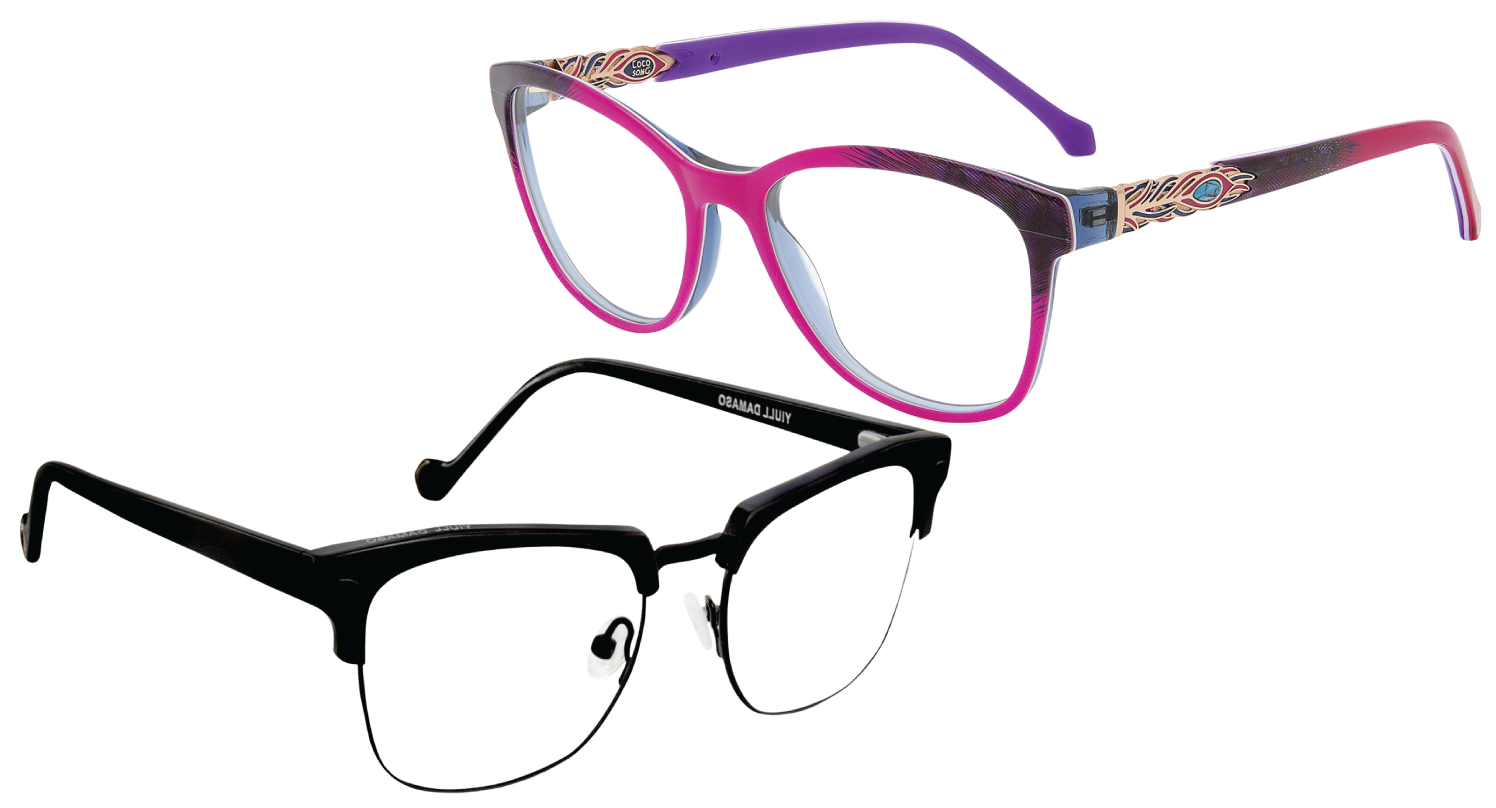
Waiting for a sign to purchase new sunglasses?
You’ve got it!
Visit De Jongh Optometry to explore our variety of Sunglass brands, we stock:
Vogue
Maui Jim
Ray Ban
Oakley
... and many more!
Swipe to see Carina in sunnies and swing by:
📞 Call us: 012 998 7592
💻 Book online: dejonghoptometry.co.za
📍 Visit us: 886 Rubenstein Dr, Moreleta Park, Pretoria
*Terms & Conditions apply. Offer valid for a limited time. Complimentary set applies to lenses with the purchase of a qualifying pair of glasses. Ask in-store for full details.


It's Friday!
Waiting for a sign to purchase new sunglasses?
You’ve got it!
Visit De Jongh Optometry to explore our variety of Sunglass brands, we stock:
Vogue
Maui Jim
Ray Ban
Oakley
... and many more!
Swipe to see Carina in sunnies and swing by:
📞 Call us: 012 998 7592
💻 Book online: dejonghoptometry.co.za
📍 Visit us: 886 Rubenstein Dr, Moreleta Park, Pretoria
*Terms & Conditions apply. Offer valid for a limited time. Complimentary set applies to lenses with the purchase of a qualifying pair of glasses. Ask in-store for full details.

Is jou oë gereed vir die volgende seisoen?
Maak seker jy gee jou oë die sorg wat hulle verdien:
• Maak seker jou oogtoets is op datum
• Beskerm jou oë teen die son
• Gee jou oë gereeld ’n breuk van skerms
• Moenie veranderinge in jou sig ignoreer nie
• Beskerm jou oë wanneer jy aan son of ander helder lig blootgestel word
Jou sig speel ’n belangrike rol in alles wat jy elke dag doen. Daarom is dit belangrik om na jou oë om te sien en enige veranderinge betyds te laat ondersoek.
Bespreek jou oogtoets by De Jongh Optometry:
🌐 dejonghoptometry.co.za

A little change can make a big difference.
Looking for a fresh new look? Now is the perfect time to update your glasses.
With our special promotion, buy a pair of glasses and receive an extra pair of lenses FREE.
Whether you’re looking for a new everyday look or simply ready for a change, we’ve got you covered.
📍 Visit De Jongh Optometry and ask us about the promotion in-store:
886 Rubenstein Dr, Moreleta Park, Pretoria
🌐 dejonghoptometry.co.za
WhatsApp: +27 60 928 9314
*Terms and conditions apply. Promotion valid for a limited time. Ask in-store for full details.

What a time to be alive!
When science and technology are applied to improve quality of life. As Optometrists we understand the limitations of having an atrophic disease - this could be the beginning of an amazing new possibility. 🤩
www.facebook.com/share/p/1F8CGQWh1u/Scientists have partially restored vision in some people who were previously unable to read because of severe damage to their central vision.
The experimental treatment uses a tiny electronic implant placed beneath the retina, combined with special glasses equipped with a camera.
The technology, known as PRIMA, was developed to help people with advanced geographic atrophy, a severe form of age-related macular degeneration that destroys cells responsible for sharp central vision.
Normally, light-sensitive cells in the retina convert light into electrical signals that travel to the brain. When these cells deteriorate, people gradually lose their ability to recognize faces, read, and see fine details.
The PRIMA system attempts to bypass damaged photoreceptors. A camera mounted on glasses captures images and sends them as infrared light to a tiny implant beneath the retina.
The implant converts this light into electrical signals that stimulate surviving retinal neurons, allowing visual information to reach the brain.
In a clinical trial involving 38 participants across 17 European hospitals, 32 completed the 12-month follow-up assessment.
Of those 32 participants, 26 demonstrated a clinically meaningful improvement in visual acuity, equivalent to at least two additional lines on a standard eye chart.
Some participants regained enough functional vision to recognize letters, numbers, and words using the system.
However, the treatment does not restore normal eyesight. The artificial vision is limited, requires external equipment, and does not reproduce natural color vision.
The results are particularly significant because advanced geographic atrophy currently has no established treatment capable of restoring vision that has already been lost.
Researchers are continuing to improve the technology and evaluate its long-term safety and effectiveness.
The findings suggest that electronic retinal implants could eventually help some people recover useful visual abilities even after severe damage to the eye’s light-sensitive cells.
Source: The New England Journal of Medicine ; Stanford Medicine; ScienceAlert.